Temporary Closures: Current advice


National Carillon Façade Remediation
Image
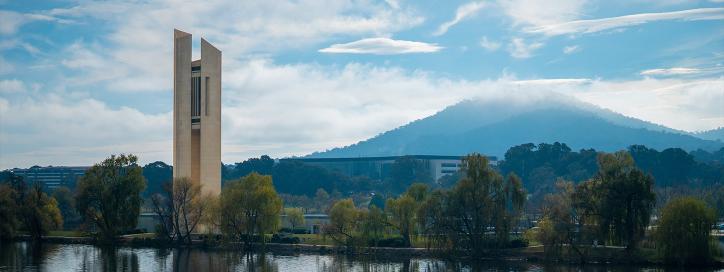
Remediation of the National Carillon Façade
Project Type
Asset Renewal
Construction Start Date
31/10/2023
Completion Date
1/07/2024
Temporary Road or Lake Closures
No
Project Overview
In 2023 the National Capital Authority carried out facade remediation works to the iconic National Carillon. The objective of the works was to ensure the structural integrity and architectural character of the national landmark for future generations.
Delivered in partnership with engineering, construction and remediation specialists Duratec Limited, the works included specialist façade cleaning, concrete repairs, renewal of external sealants, roof system upgrades, glazing works, and the installation of additional cladding support.
You can watch a timelapse video of the works below.
Video file
Facts about the National Carillon
The National Carillon, located on Queen Elizabeth II (QEII) Island, was originally opened in 1970.
The Carillon was a gift to Australia from the British Government in 1963 to commemorate the fiftieth jubilee of Canberra’s founding as the National Capital. The Carillon is recognised as being of heritage significance and is listed in the Commonwealth Heritage List (ID105346).
The 50-meter-tall structure is comprised of three free standing triangular towers, which are clad with precast ferrocement façade panels. The towers provide support to slabs that form the three floors for the clavier chamber, bell chamber and viewing gallery.
In accordance with good asset management practice, a detailed structural inspection was undertaken by the NCA to assess the condition of the facade and underlying reinforced concrete structure.
The investigation identified defects with the facade panels, flexible waterproof sealant (facade joints) and the cementitious waterproofing membrane across the structure.
Project Benefits
The works restored and protected the National Carillon as a landmark for future generations.
We repaired and restored the façade panels, that are a cement and quartz aggregate blend, close to original finish, cleaning away years of staining and contaminants that built up over time. We also repaired any small cracks and damaged sections. This resulted in an aesthetic uplift to the overall building.
The renewal of the waterproofing systems will protect the structural elements of the building, preventing deterioration and damage that may be caused by water passing through the structure.